Extraocular Vision
Jacobo Grinberg's Observations of Non-local Consciousness

JACOBO GRINBERG-ZYLBERBAUM
“Evolution has built a retina that in its structure resembles or at least incorporates the logical structure of the universe in it so that its algorithmic labor of decodification does not distort the natural logic of the external world.”
This report investigates the phenomenon of extraocular vision, a form of non-retinal perception observed in children between the ages of 5 and 13. Led by neurophysiologist Jacobo Grinberg-Zylberbaum of the National Autonomous University of Mexico, this research originated from observations of a 1982 Televisa broadcast and culminated in controlled experiments conducted in Cuernavaca and Toluca. Throughout the study, nineteen blindfolded subjects successfully described visual stimuli through dermal contact or mental imagery, achieving a level of perceptual clarity comparable to standard retinal vision. Because stringent controls were implemented to eliminate the possibility of conventional visual input or external influence, the results suggest the existence of underlying neurophysiological mechanisms linked to non-local consciousness. These findings are supported by contemporary analyses of brain-to-brain correlations and interhemispheric coherence. Ultimately, this report examines both quantitative and qualitative data to clarify the neural and energetic foundations of this extraordinary perceptual ability.

Introduction
Extraocular vision represents a form of extrasensory perception (ESP) or remote sensing, enabling the acquisition of information about objects or phenomena without direct physical contact. In 1982, neurophysiologist Jacobo Grinberg-Zylberbaum from the National Autonomous University of Mexico was invited by Televisa to observe a demonstration of extraocular vision during a live broadcast. Approximately twenty blindfolded accurately identified visual details from photographs. Contemporary research, including probabilistic models of brain-to-brain synchronization by Del Rosario-Gilabert and Vigué-Guix (2025), supports correlations to non-local perceptual processes, aligning with observations of a shared neuronal field marked by elevated activity in parietal and temporal regions. Though initially skeptical, Grinberg found no evidence of deception. This inspired a proposal to adapt the technique for blind children. Grinberg pursued autonomous experiments during a sabbatical in Cuernavaca and extended them in Toluca, yielding replicable results, prompting a formal investigation. This analysis examines the methodology, results, and theoretical implications of extraocular vision, challenging traditional sensory processing paradigms and exploring alternative perceptual modalities.
Recent data reveals distinct neural responses in ESP:
EEG Differences: Variations in theta, beta, and gamma bands reject fraud or pathology hypotheses, distinguishing ESP from imagination.
Comparative Profiles: Similar to mediumship, ESP elicits unique brain dynamics, with imagination acting as a "gateway" to ESP-like states.
Dreaming and Sensory Binding: Gamma oscillations in lucid dreaming mirror higher-order processing in ESP. For example, vividly imagining a scene to evoke emotions can mimic theta-mediated processing in dreams, potentially bridging to non-local perceptions.
Power Spectral Density (PSD): ESP tasks show increased PSD compared to imagination alone, with large effect sizes (e.g., Cohen's d = −2.6546 for beta bands), indicating deeper altered states of consciousness.
Savagenesis
Imagination and dreaming may serve as a baseline for ESP by "hijacking" internal simulation pathways. If imagination simulates senses internally, ESP could integrate anomalous external inputs, amplifying gamma spikes and enhancing non-local connectivity within a collective neuronal field. The process of Savagenesis is described as active dreaming, and acts as a precursor to ESP. It involves perceiving a syntergic continuum of imagination and altered states within a multidimensional reality, extending dream-like states to enhance perceptual capabilities.
Materials and Methods
The study focused on a group of nineteen children, comprising eleven girls and eight boys, recruited from six different schools in Mexico. These participants were in optimal health and had no prior experience with extraocular vision. While they were characterized as highly intelligent, they were also noted for being restless and occasionally resistant to strict discipline. Interestingly, the most stable initial proficiency was observed in seven participants who came from consistent family environments, although varying family conditions did not ultimately prevent the other children from achieving results.
Training Protocol
The participants underwent a structured training program lasting between one and three days, which was repeated until the skill became automated. The process followed a specific sequence:
Breathing Exercises: Training began with sixty seconds of forced nasal exhalation, followed by sixty seconds of alternate nostril breathing, and concluded with rhythmic forced inhalation and exhalation to the child’s limit.
Internal Focus: After each breathing exercise, the children focused on the inter-eyebrow region for twenty seconds.
Meditation: A session of five to thirteen minutes followed, during which the children allowed their thoughts to flow freely while contemplating the question, “Who am I?”
Visualization: Instructors guided the children to visualize a luminous line connecting their hands to their foreheads, sometimes using quartz crystals to intensify their focus.
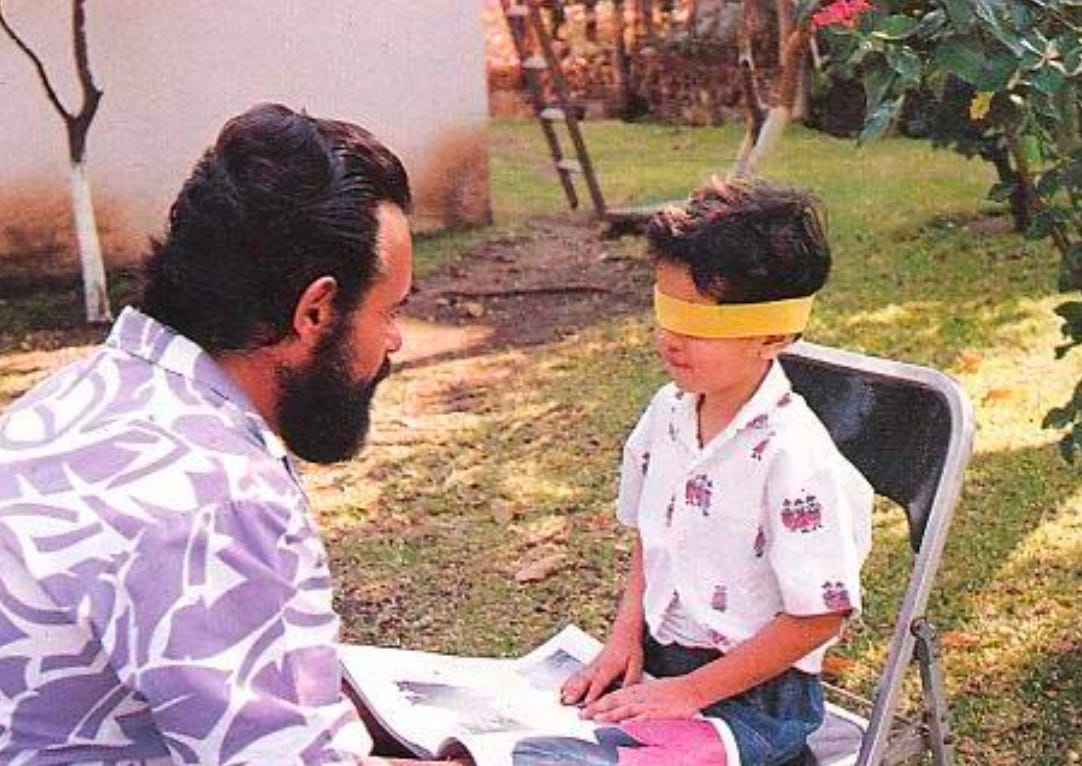
Perceptual Transition: Once blindfolded with opaque bandages, the children moved from dermal contact with color photographs to non-contact visualization, supported by verbal encouragement and intuitive hand movements.
Experimental Design and Controls
To ensure the veracity of the phenomenon, the researchers employed various graphic materials, including books and television content, alongside environmental navigation tasks. Rigorous controls were established to rule out conventional explanations:
Visual Integrity: Bandages were continuously checked to ensure no retinal input was possible.
Elimination of Cues: Materials were selected randomly to prevent anticipation, and naïve instructors were used to eliminate unconscious prompting.
Environmental Obstruction: Tests were conducted in total darkness to exclude photonic mediation, and various barriers such as glass, wood, and metal were used to identify which areas of the body mediated the perception.
Standardization: Tasks were assessed against the laws of perspective and Gestalt principles to see if the extraocular vision functioned like traditional sight.
Data Collection and Analysis
The data collection protocol encompassed qualitative descriptions of perceived content, accuracy rates, and behavioral observations such as fatigue and head tilting. In addition to these qualitative indicators, quantitative measures were recorded to establish reading distances and perceptual thresholds, specifically the resolution of one-millimeter letters at distances ranging from 70 to 100 centimeters. Although formal statistical methods were not applied, the resulting analysis prioritizes the identification of recurring patterns and the demonstration of replicability across experimental sessions.
Results
The results revealed that all nineteen participants acquired extraocular vision within a remarkably short period. Most experienced a sudden qualitative leap, moving from a total inability to decode information to near-perfect accuracy. While initial descriptions required the children to sweep their hands over the material, they eventually progressed to non-contact perception.
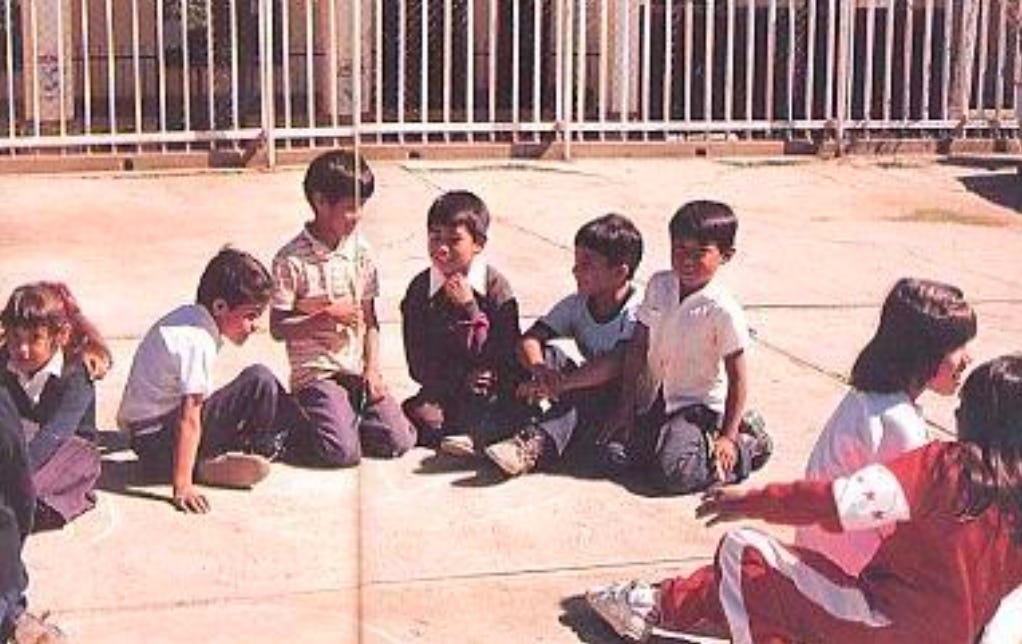
The accuracy of this perception matched retinal vision in both detail and fidelity. For example, participants could describe complex landscapes and objects with ease. Notably, two children demonstrated extraocular reading speeds that surpassed their normal reading capabilities. Furthermore, the participants successfully adhered to the laws of perspective; when objects were moved further away without their knowledge, they described the objects as "distancing" rather than simply getting smaller. They also correctly identified colors across the full spectrum and interpreted superimposed or moving stimuli without error.
Advanced Abilities and Internal Perception
Beyond the identification of external objects, the children exhibited omnidirectional and internal perceptual capabilities. One six-year-old girl, while blindfolded, was able to navigate a park while describing everything surrounding her in all directions simultaneously.
Perhaps most striking was the emergence of internal vision. Children were able to identify the internal states of organs and recognize past injuries, such as bone fractures, in adult observers. These observations were later corroborated by the affected individuals. In two specific cases, participants appeared to alleviate the symptoms of ear infections in adults through what was described as energy emission, with the healing effects lasting for several days. This suggests that extraocular vision may tap into cross-modal retrieval mechanisms, where neurons in areas like the pulvinar nucleus blend multi-sensory data (Grinberg-Zylberbaum, 1976).
Thresholds and Mediators
Reading thresholds for one-millimeter characters were established at approximately 70 centimeters in the absence of hand sweeps, whereas this range extended to 100 centimeters when such movements were utilized. These measurements are noteworthy because they directly correspond to the limits of standard retinal vision under similar environmental conditions. While the mediating body areas varied between individual subjects, the physical obstruction of the chin or mouth frequently resulted in impaired perception. Nevertheless, no consistent or universal critical region was identified across the participant group.
Furthermore, the application of quartz crystals enhanced the performance of five participants by increasing their perceptual range and adding a three-dimensional quality to their vision. This phenomenon suggests that such perception may involve the activation of divergence circuits that recreate stored patterns, which are specifically triggered by heightened states of neurophysiological excitability. (Grinberg-Zylberbaum, 1976).
Developmental and Psychological Factors
Participants possessing a robust sense of personal identity and confidence acquired the skill at an accelerated rate. This correlation between self-awareness and skill acquisition underscores the role of personal identity as a significant factor in detecting non-local brain interactions (Grinberg-Zylberbaum, 1994). Furthermore, the phenomenon appears to be age-sensitive, as training attempts were typically unsuccessful in individuals beyond fifteen years of age. This limitation suggests a specific developmental window of peak neuroplasticity that is necessary for such abilities to manifest (Grinberg-Zylberbaum, 1976).
Although initial sessions were characterized by fatigue and ocular discomfort, these symptoms progressively diminished with practice. This transition indicates that energy expenditure in previously untrained pathways adapts over time through sustained mental focus and intent. Such adaptation involves distinct neural responses for conscious meaning-making (Grinberg-Zylberbaum, 1981), a process that is consistent with contemporary probabilistic models of ESP. These models have identified similar neural adaptations and provide support for the hypothesis of state-specific brain activity (Del Rosario-Gilabert and Vigué-Guix, 2025).
Finally, the outcomes were significantly facilitated by trust in instructors and the implementation of group visualizations, both of which served to amplify perceptual clarity. These findings align with the documented effects of meditative bonding on brain-to-brain synchronization during empathic states. Therefore, the evidence suggests that extraocular vision is activated and sustained through a shared mental field (Grinberg-Zylberbaum, 1994).
“Phase coherence is a well-known signature of quantum nonlocality . . . . striking similarity between the transferred and evoked potentials and the total absence of transferred potentials in the control experiments leaves no room for doubt about the existence of an unusual phenomenon, namely, propagation of influence without local signals.”
— JACOBO GRINBERG-ZYLBERBAUM
The Einstein-Podolsky Rosen Paradox in the Brain: The Transferred Potential (1994)
Interpretation of Findings
Jacobo Grinberg’s research identifies extraocular vision as a replicable phenomenon that fundamentally challenges traditional sensory processing paradigms. Because this perception occurs independently of retinal input, it aligns with the concept of the “informational matrix” in which consciousness functions as a dynamic influencer. Within this paradigm, consciousness actively extracts meaning from a syntergic field rather than acting as a passive recipient of external stimuli. This active role is verified by documented average evoked potentials in the parietal and temporal lobes, where neural patterns shift according to the intentional meaning assigned to a stimulus (Grinberg-Zylberbaum, 1981). Furthermore, the non-photonic nature of these results, as evidenced by success in total darkness and across various physical barriers, points toward an energetic basis for perception that operates outside conventional thermal or photonic fields.
“The phenomenon we are dealing with is the action of nonlocal collapse of the wave function of a unified system and not the result of a transmission using local signals from one brain to the other . . . . Consciousness is involved in the process of [quantum brain-to-brain] correlation. ”
— JACOBO GRINBERG-ZYLBERBAUM
The Einstein-Podolsky Rosen Paradox in the Brain: The Transferred Potential (1994)

Conclusion
Jacobo Grinberg’s investigation into extraocular vision identifies a profound human capacity for non-retinal perception through rigorous experimentation. Because this phenomenon exhibits a fidelity comparable to retinal vision, it suggests the activation of alternative sensory pathways via specific training and sustained mental focus. While the precise mechanisms are the subject of ongoing inquiry, the psychophysiological interplay between personal identity and developmental constraints provides a foundation for systematic hypothesis generation. Central to this understanding is the role of consciousness as a dynamic influencer of perception, as it modulates stimuli through distinct neural patterns in the parietal and temporal lobes based on intentionality (Grinberg-Zylberbaum, 1994). Consequently, extraocular vision involves the conscious construction of meaning from non-sensory input, utilizing brain regions associated with the power of manifestation.
Furthermore, the synthesis of research on interhemispheric coherence and brain synchronization indicates that extraocular vision is a constituent element of a non-local, collective consciousness. Observations of collective mental states during group training sessions suggest that perception is facilitated by a harmonized neural tuning, analogous to the synchronization documented in empathic interactions. Because these findings demonstrate the significant influence of intentionality on neural patterns, specifically regarding brain-to-brain quantum correlations (Grinberg-Zylberbaum, 1994), they provide a clear imperative for the scientific community to pursue rigorous interdisciplinary research. Ultimately, the exploration of extraocular vision facilitates critical advancements in the understanding of the human mind and the fundamental nature of reality, offering the potential to revolutionize neurophysiology, education, and therapeutic practices once ethical and cultural barriers are navigated.
“Consciousness is power. Imagined power [is] knowledge dreaming.”
Savagenesis Methodological Framework for Jacobo Grinberg-Zylberbaum's Syntergic Theory

Savagenesis presents as a methodological framework that characterizes imagination and “Active Dreaming“ as objective cognitive states with quantifiable neuro-physical correlates . . . Savagenesis proposes a generative model of consciousness. In this framework, intuition is identified as a biological registration of a quantum wave function capable of encoding information across the space-time continuum.
Savagenesis: Intuition Ψ “Atlas” for Body, Mind, and Spirit

“INTUITION “Ψ” IS A WAVE FUNCTION ACROSS SPACE AND TIME CAPABLE OF PREDICTING OUTCOMES.”
Intuition emerges as an evolutionary mechanism capable of integrating information across both the physical matter and syntergic spectra of human experience. Its intrinsic capacity lies in enhancing awareness and promoting adaptability within an increasingly complex and dynamic world.
Savagenesis and the Syntergic Theory of Consciousness: Evolution and Human Potential

Conscientia. Potentia. Est veritas. Conscientia Potentia Est.
References
Aharonov, Y., & Bohm, D. (1959). Significance of electromagnetic potentials in the quantum theory. Physical Review, 115(3), 485–491.
Berke, G. (2025). A frequency-based framework for consciousness: Neurocognitive, computational, and field-dynamic modeling. Zenodo. (CERN European Organization for Nuclear Research).
CIA. (n.d.). A study of some ESP testing methods and their validity. In Freedom of Information Act Reading Room (FOIA).
Cramer, J. G. (1986). The transactional interpretation of quantum mechanics. Reviews of Modern Physics, 58(3), 647–687.
Del Rosario-Gilabert, D., & Vigué-Guix, I. (2025). Unveiling the EEG signatures of extrasensory perception during spiritual experiences: a single-case study with a well-renowned channeler. Science Direct, 21(2).
Galinsky, V. L., & Frank, L. R. (2020). Universal theory of brain waves: from linear loops to nonlinear synchronized spiking and collective brain rhythms. Physical review research, 2(2), 023061.
Grinberg-Zylberbaum, J. (1983). Extraocular vision. Psychoenergetics 5, 141-58.
Grinberg Zylberbaum, J. (1991). La teoría sintérgica. Instituto Nacional para el Estudio de la Conciencia. [ISBN: 968-6022-13-9]
Grinberg-Zylberbaum, J., & John, E. R. (1981). Evoked potentials and concept formation in man. Physiology & behavior, 27(4), 749–751.
Grinberg-Zylberbaum, J., & Ramos, J. (1987). Patterns of interhemispheric correlation during human communication. International Journal of Neuroscience, 36, 41–53.
Grinberg-Zylberbaum, J. ( 1982). Psychophysiological correlates of communication, gravitation and unity. The syntergic theory. Journal of Psychophysical Systems, 4, 227-256.
Grinberg-Zylberbaum, J., Delaflor, M., Attie, L., & Goswami, A. (1994). The Einstein-Podolsky-Rosen paradox in the brain: The transferred potential. Physics Essays, 7(4), 422–428.
Grinberg-Zylberbaum, J. (1983). The orbitals of consciousness. A neurosyntergic approach to the discrete levels of conscious experience. Psychoenergetics, 5(3), 243–252. Gordon and Breach Science Publishers.
Grinberg-Zylberbaum, J. (1983). Comment by Jacobo Grinberg-Zylberbaum: Relationship between information and meaning. Journal of Social and Biological Structures, 6(2), 141–144.
Grinberg-Zylberbaum, J. (1981). The transformation of neuronal activity into the conscious experience: The syntergic theory. Journal of Theoretical Biology, 4(2), 201–210.
Grinberg-Zylberbaum, J. (1976). The retrieval of learned information—A neurophysiological convergence-divergence theory. Journal of Theoretical Biology, 56(1), 95–110.
Grinberg-Zylberbaum, J. (1997). Ideas about a new psychophysiology of consciousness: The syntergy theory. The Institute of Mind and Behavior, Inc., 18(4), 443–458.
Kaplan, A. (1982). Meditation and Kabbalah. Samuel Weiser.
Lizzini, O. (2021). Ibn Sina’s metaphysics. In E. N. Zalta (Ed.), The Stanford Encyclopedia of Philosophy (Fall 2021 ed.). Stanford University.
Lori, N., Machado, J. Gridography tractography reveals communication between key areas from global workspace and integrated information theories of consciousness. Sci Rep (2025).
Narváez, R. R. (2023). ‘Jacobo Grinberg-Zylberbaum’. Psi Encyclopedia. London: The Society for Psychical Research.
Neurosintergia – Activa tu naturaleza sintérgica. (n.d.).
Savagenesis: Intuition ψ “Atlas” for body, mind, and spirit. (2025). Savagenesis.
Savagenesis: Intuition is the evolutionary mechanism holding the truth about energy, frequency, and vibration” (2025). Savagenesis.
Savagenesis and the Syntergic Theory of Consciousness (2025). Savagenesis.
Savagenesis and the Syntergic Theory of Consciousness: Neuronal fields and Pre-Space (2025). Savagenesis.
Savagenesis and the Syntergic Theory of consciousness: Defining Savagenesis (2025). Savagenesis.
Savagenesis and the Syntergic Theory of Consciousness: Applications and Relevance (2025). Savagenesis.
Savagenesis. (2025). In Urban Dictionary.
Urdaneta, I. (2024, November 18). Dr. Jacobo Grinberg: A Pioneer in Consciousness Studies - The International Space Federation (ISF). Spacefed.
van Mourik, T., Bühl, M., & Gaigeot, M. P. (2014). Density functional theory across chemistry, physics and biology. Philosophical transactions. Series A, Mathematical, physical, and engineering sciences, 372(2011), 20120488.
Zhu, W., Sice, P. V., Zhang, W., Krajewska, K., & Zhao, Z. (2025). Parallels between the physical vacuum and concept of Qi in medical qigong: Comprehending oneness. Kybernetes, 54(15), 7781–7794.
Learn More: